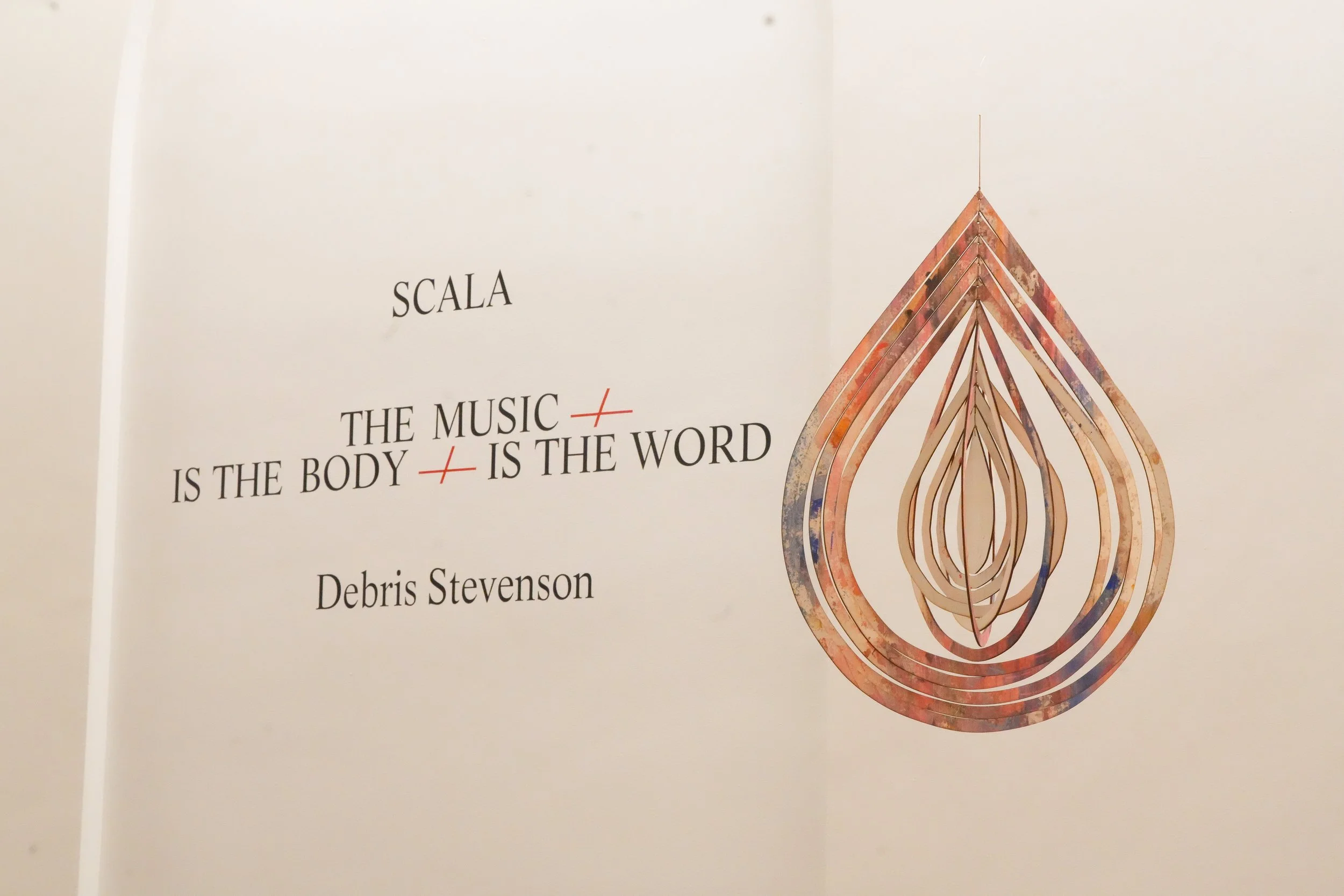
The Music / Is the Body / Is the Word
An exploration of my two cultural lifelines the sonic-seam
between Bass Culture and Neuroqueerness
What is it?
The Music / Is the Body / Is the Word is a practical research project including an installation, live performance and workshop series that can be hired and adapted for venues and spaces all over the word.
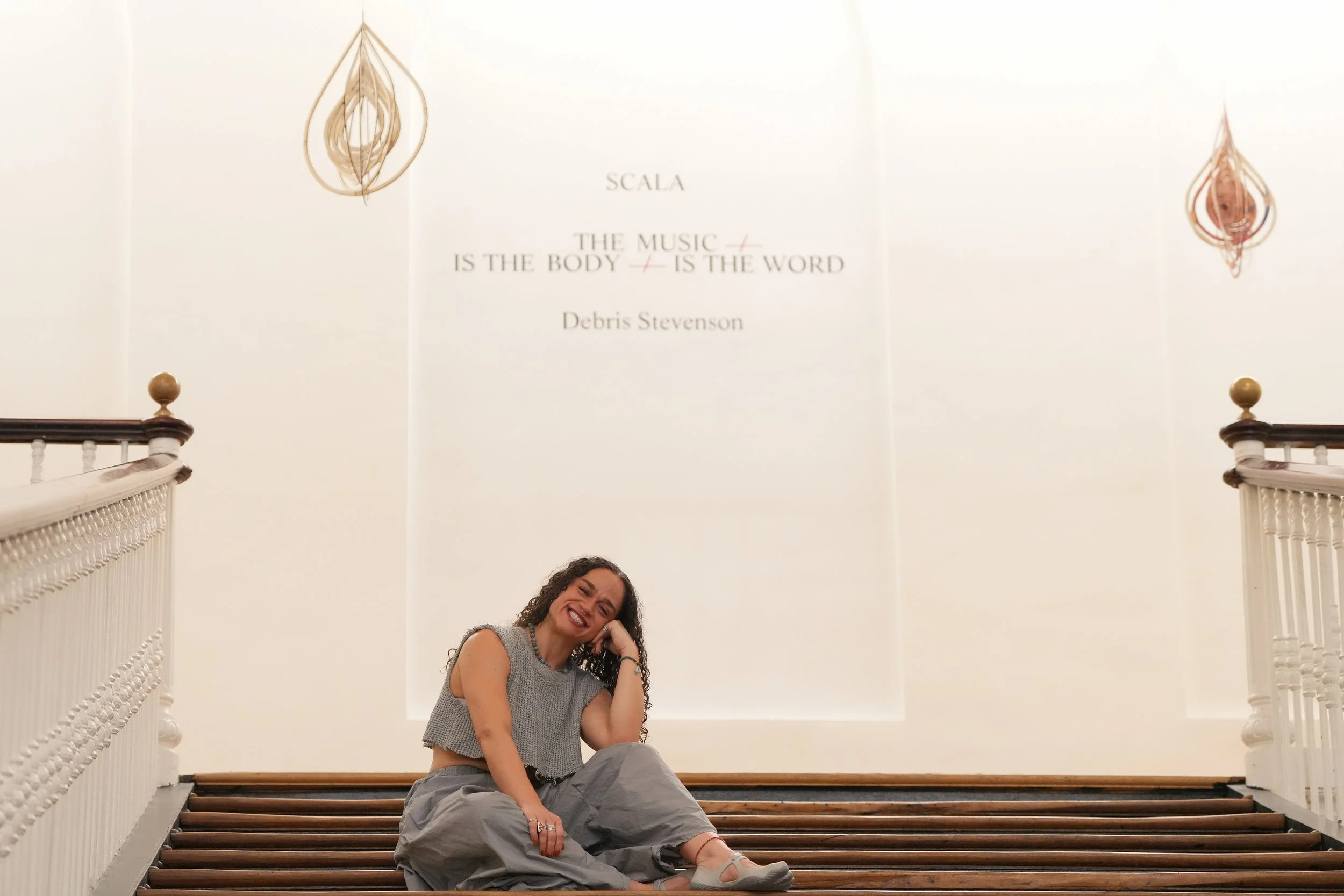
The Installation
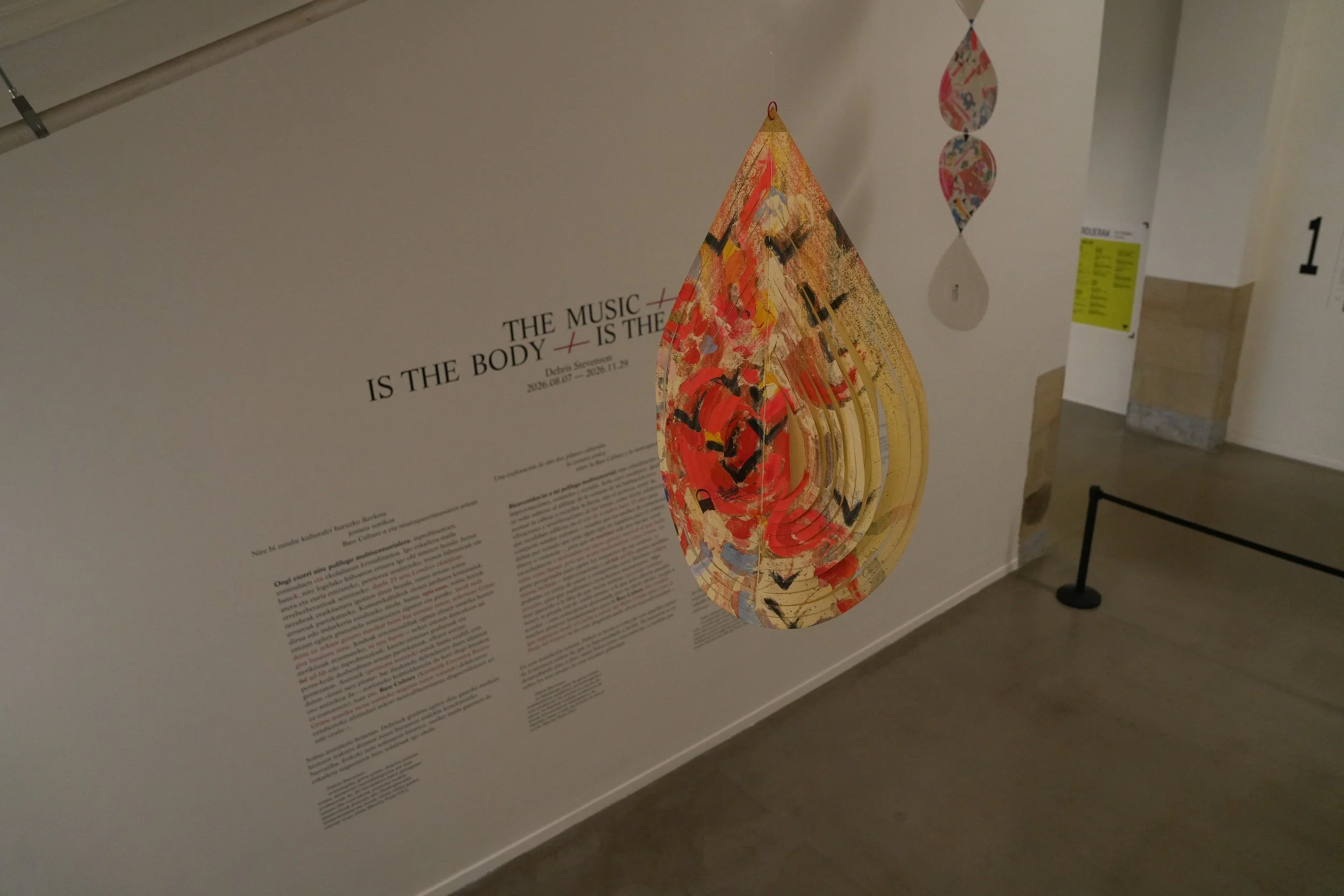
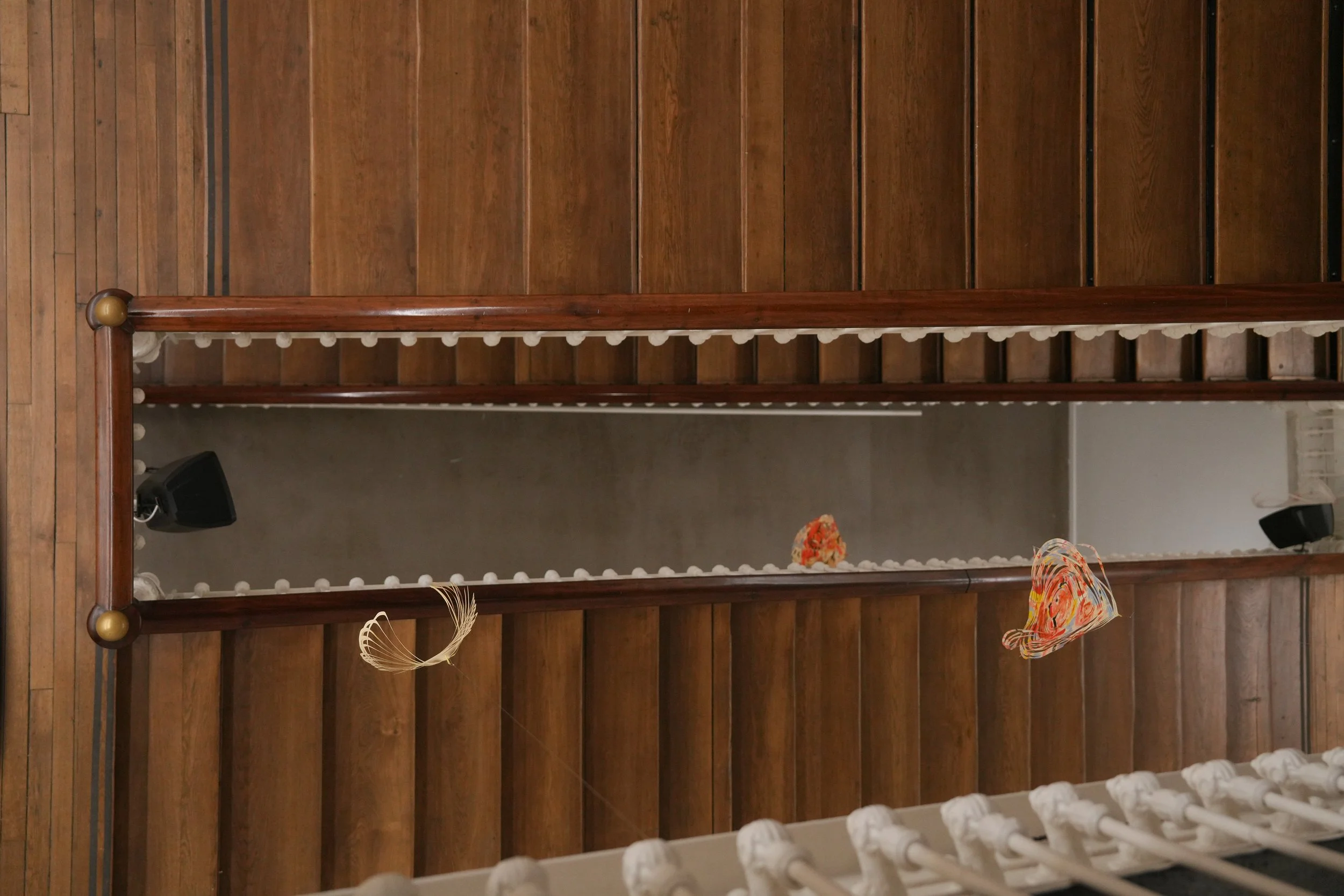
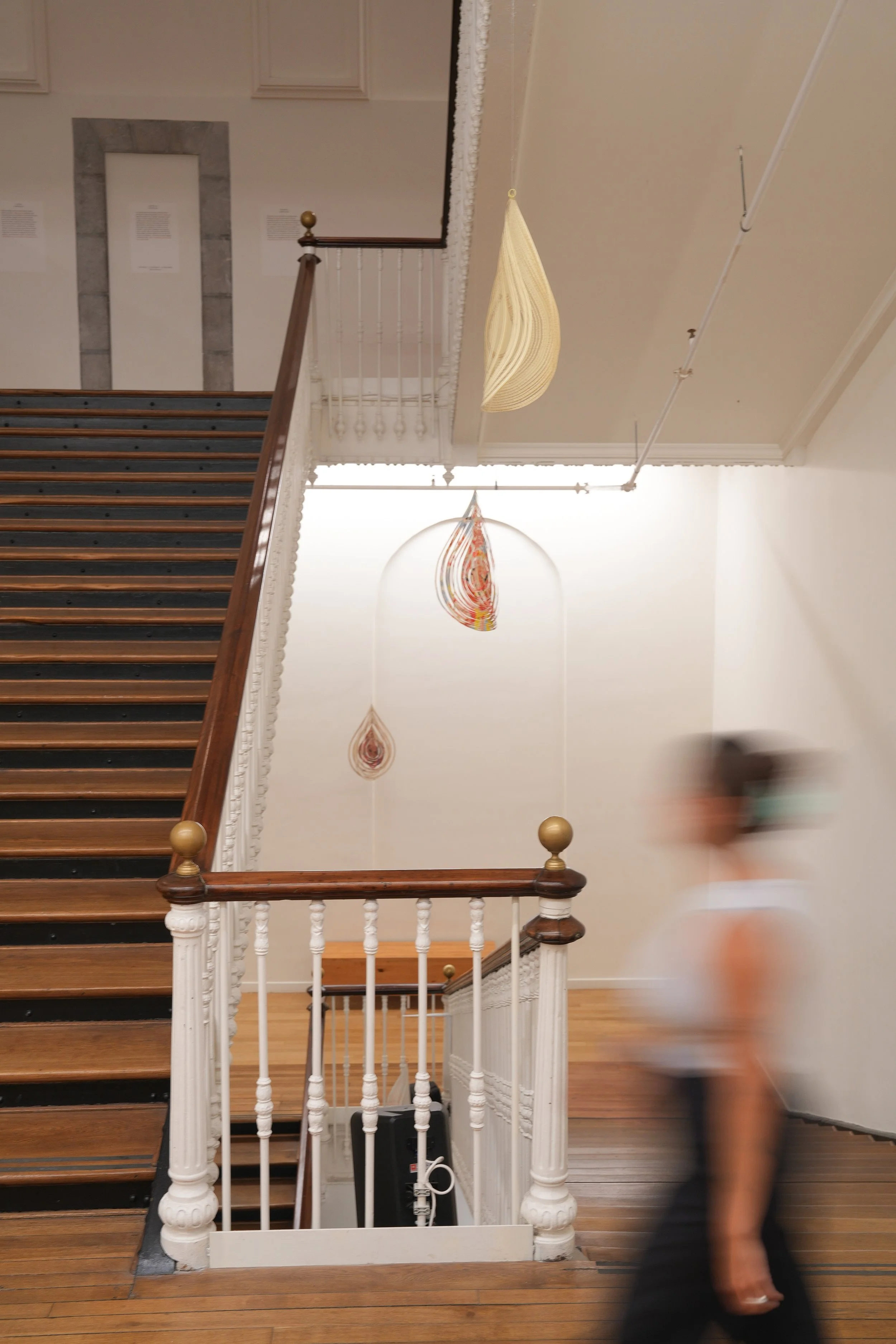
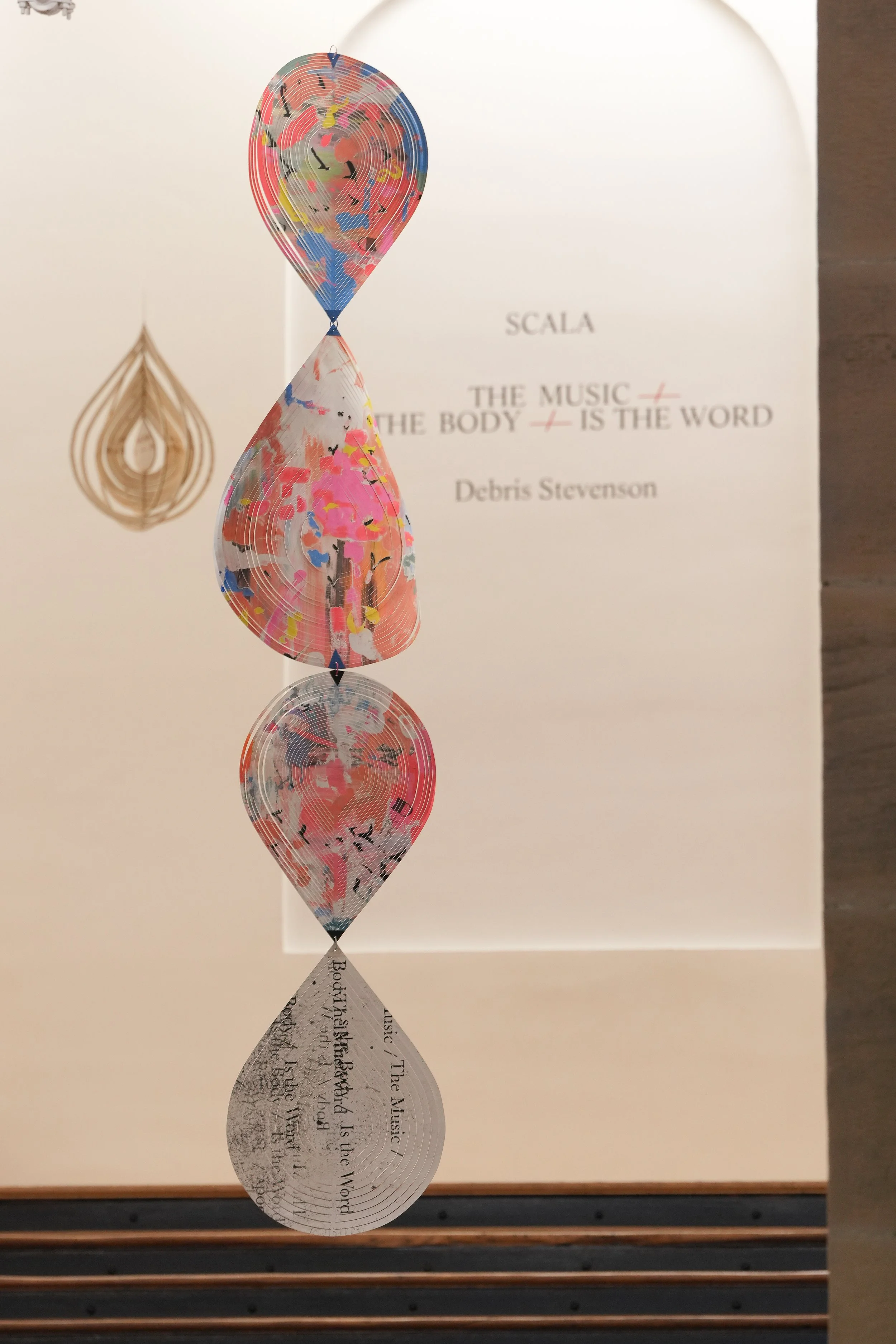
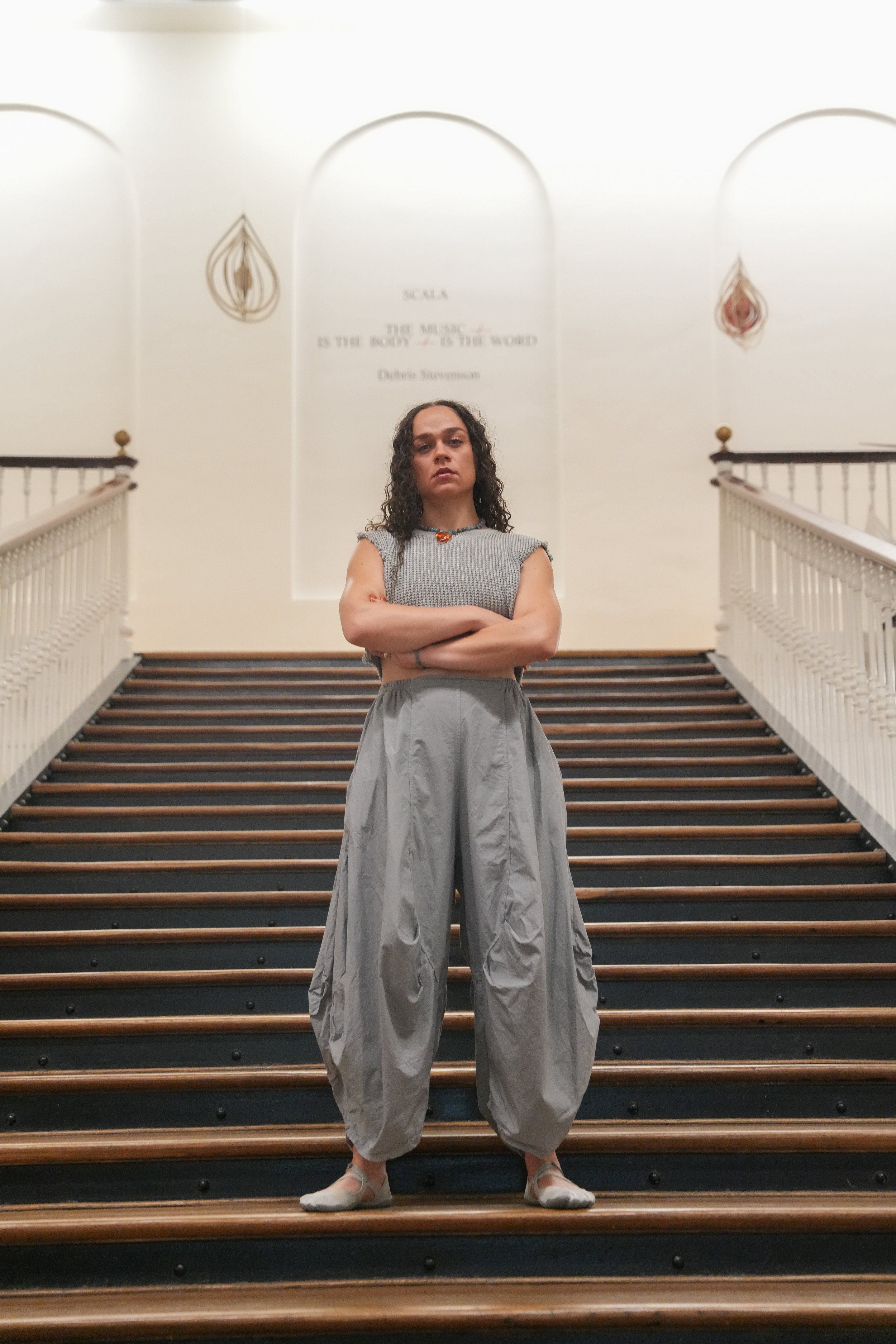
This installation by the artist Debris Stevenson was initially commissioned by Tabakalera, an International Centre for Contemporary Culture in Donostia, San Sebastian, Spain. As part of their Scala installation series ‘encompassing the building's main staircase. Scala uses the three flights of Tabakalera’s central staircase to represent the harmonic division of the audible spectrum and invites the public to take part in a multisensory conversation.’ But it can also be adapted to other types of public, private and outdoor spaces.
8 speakers, 16 scores, 32 minutes.
The installation is an invitation into my multisensory polylogue; a crystallisation of ad-libs, stims, and echolalia climbing through speakers and radio waves, as I used to climb onto my bedroom windowsill – to stick my head out and hear the rain, smell the petrichor, feel the vibrations and reverberations of the trains like the teenagers who scaled buildings in East London 25 years ago to share strange sounds with one another, sounds the media assumed were some cover up for crime or money or violence – but actually just made us feel heard and invented a new genre of music none of us knew what to call but eventually was christened as, Grime. People pilgrimaged to catch the edges of that static, myself included = barely audible ad lids ad-libs, people recorded on cassette tapes and shared across post-codes – so we could hear each other. Much like the notion that Autists (Autistic people) have their own ‘Pirate Radio’ network only they can access – which is serendipitous (if not obvious) because many of the Godfathers that are essential to Bass Culture (the sounds migrating from the Caribbean through the UK to create Grime’s lineage) are now being diagnosed as neurodivergent.
Live Performance
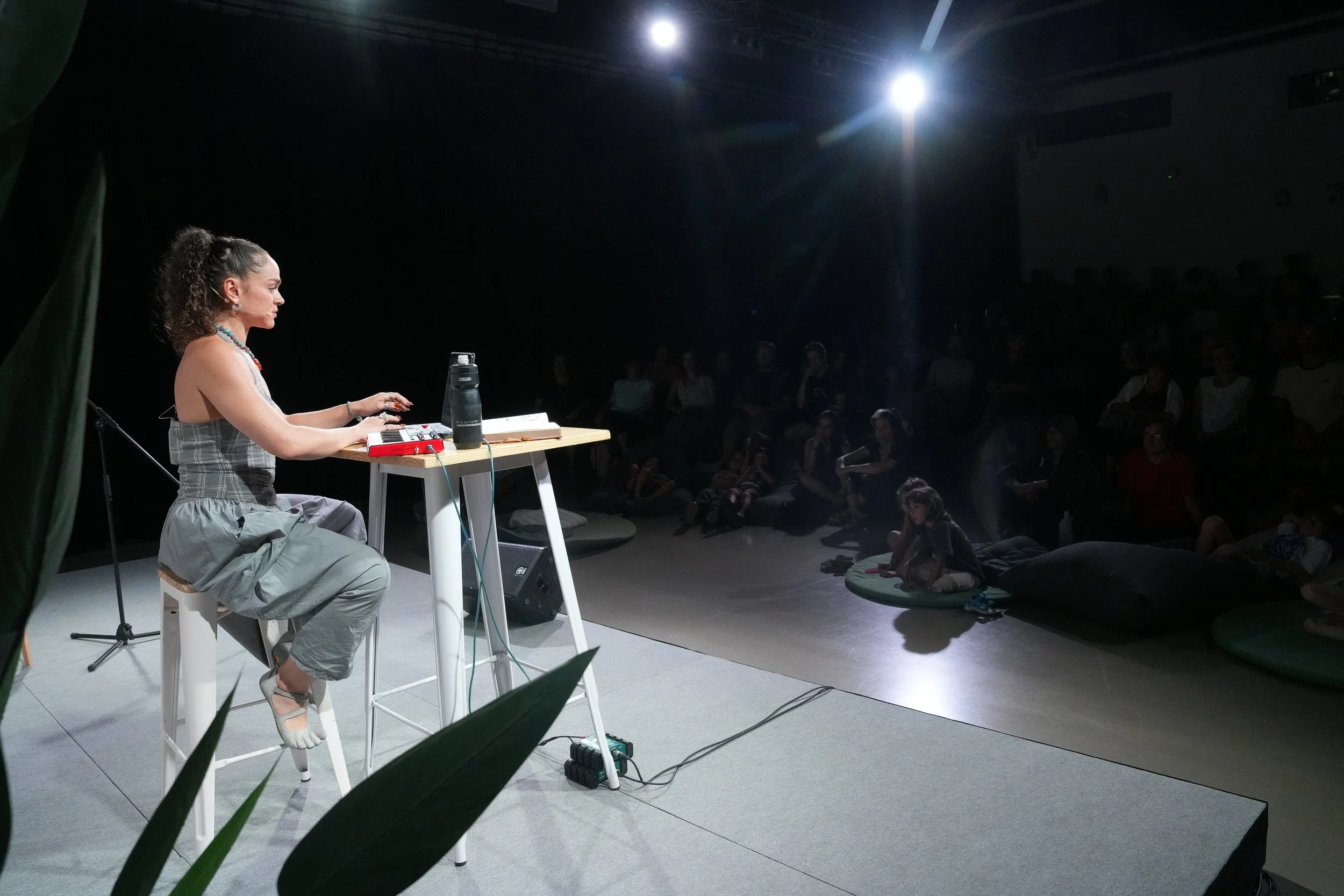
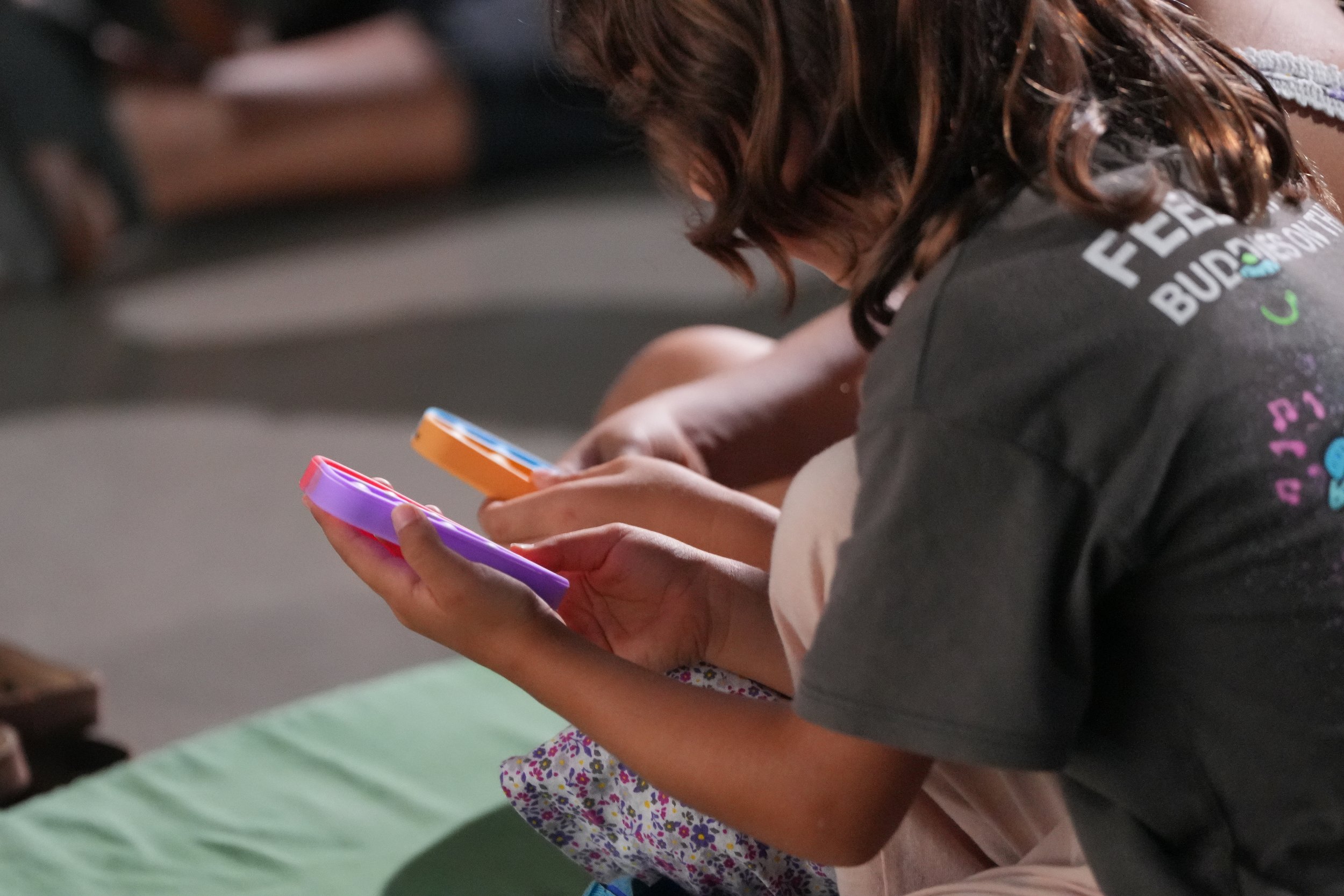
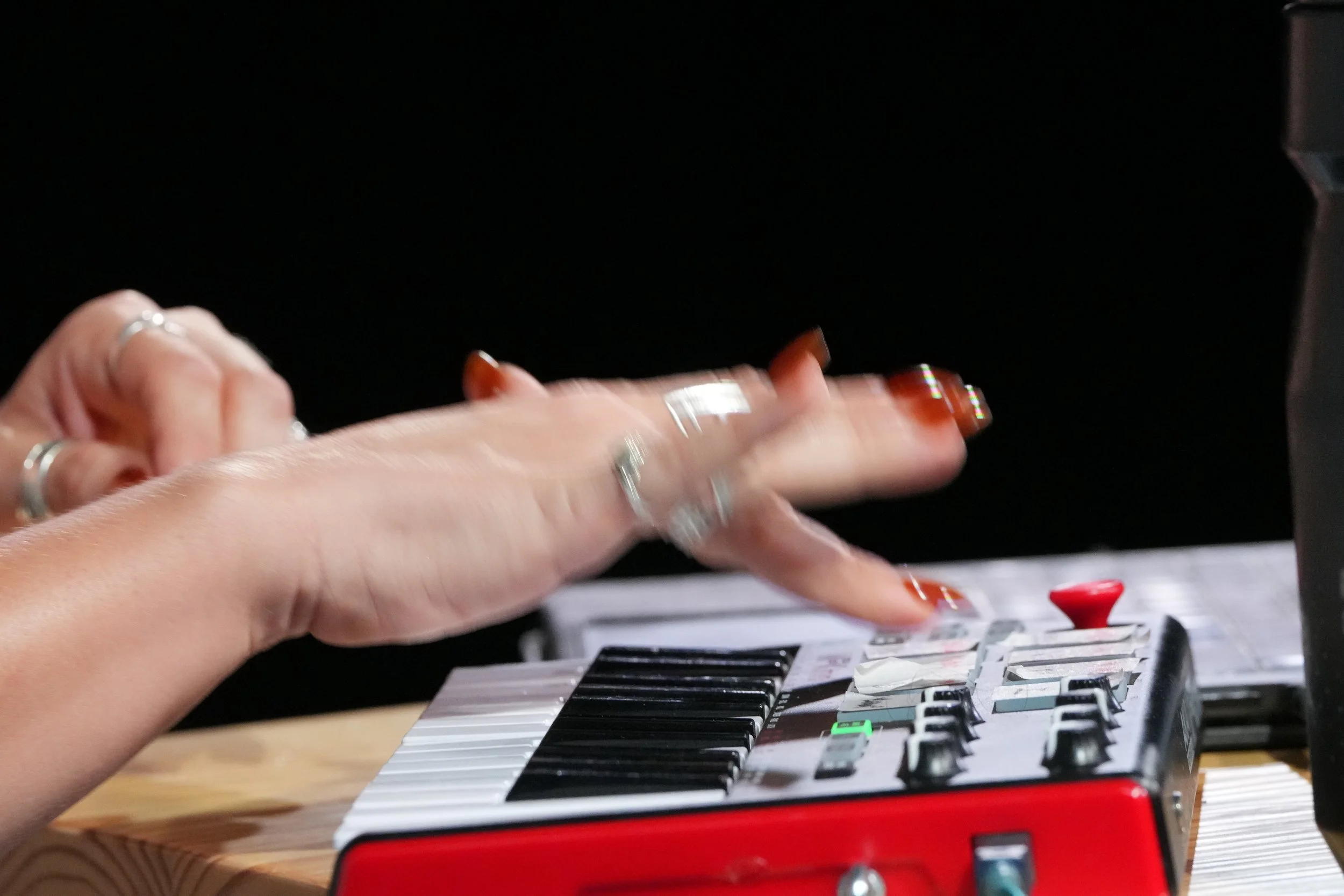
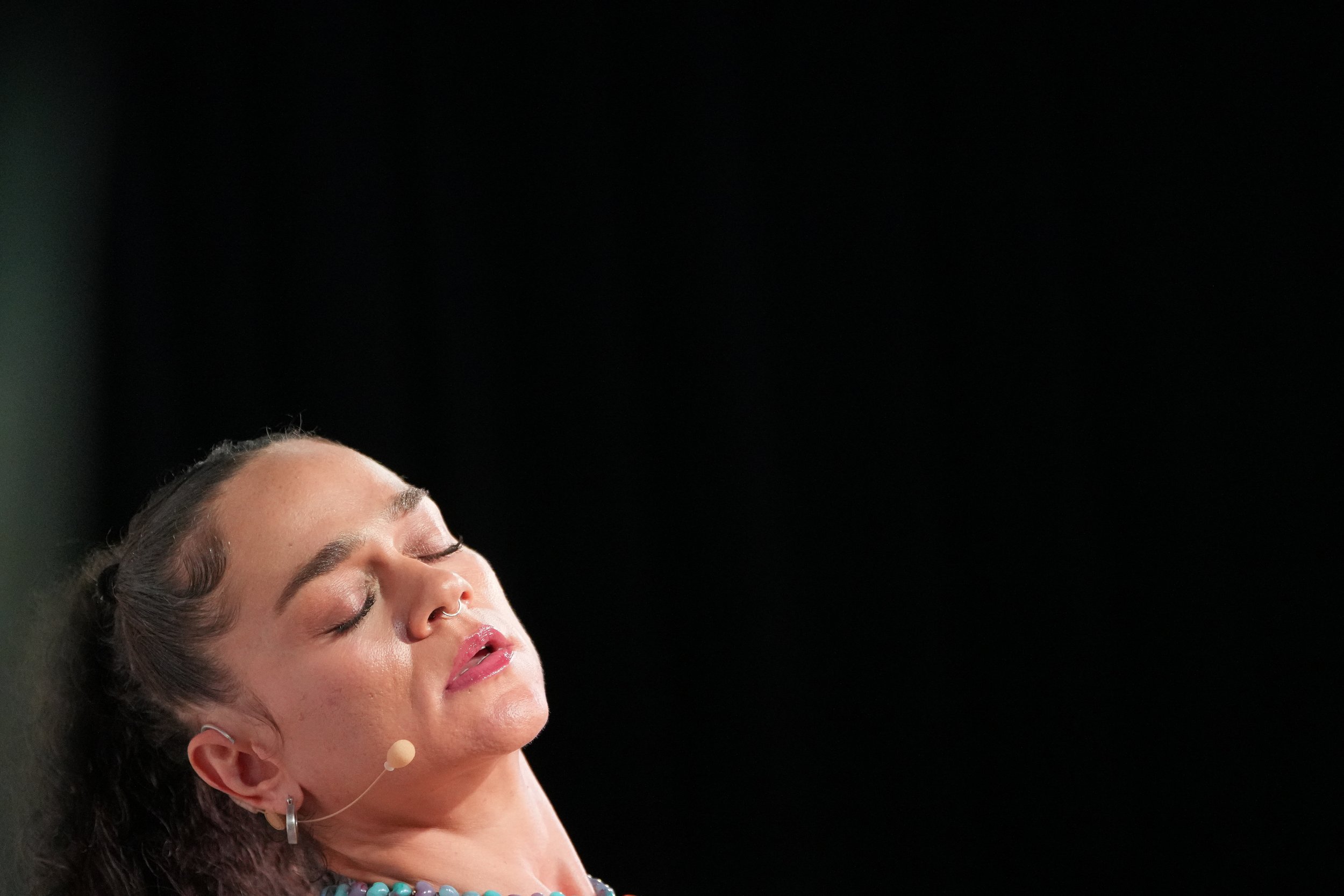
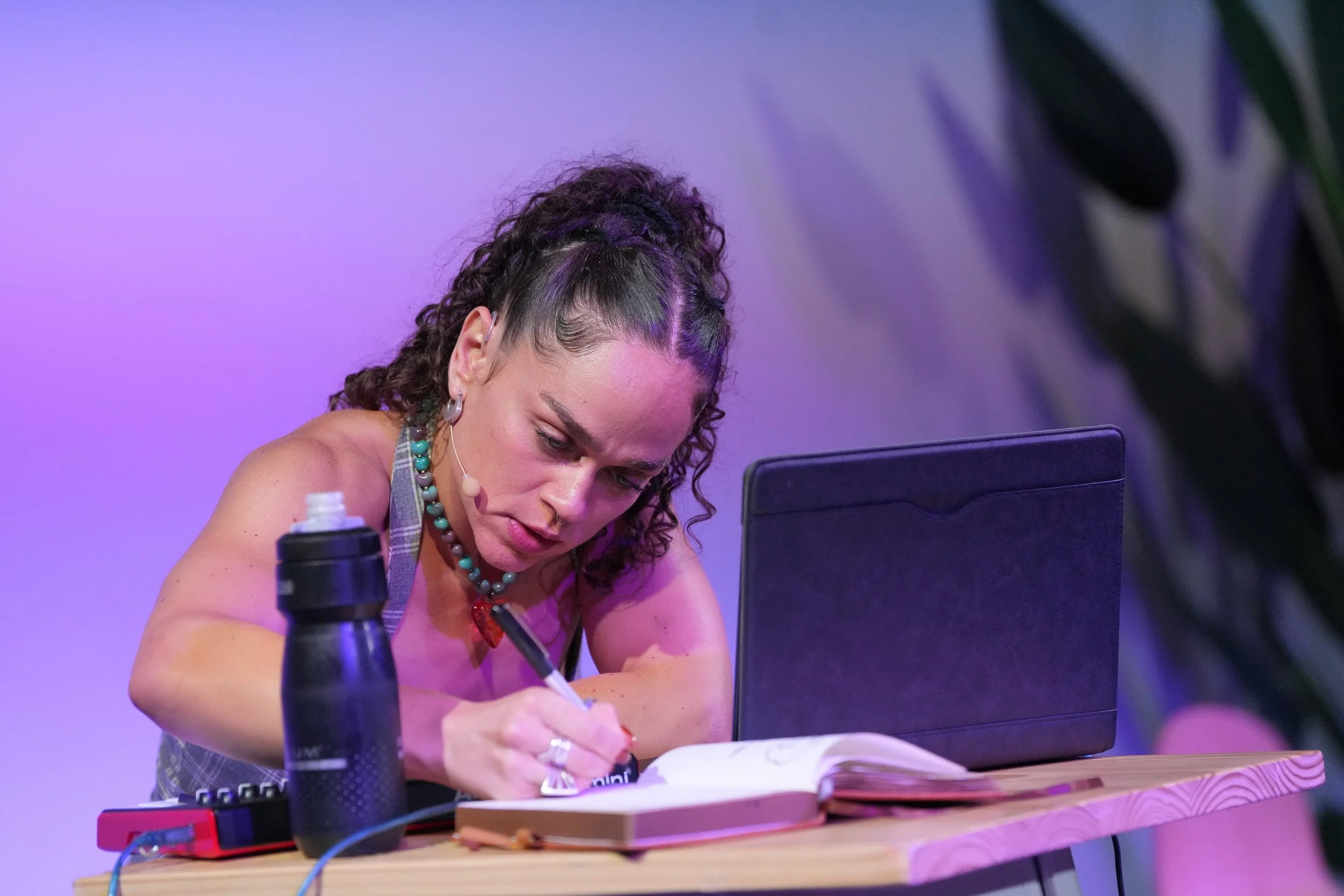
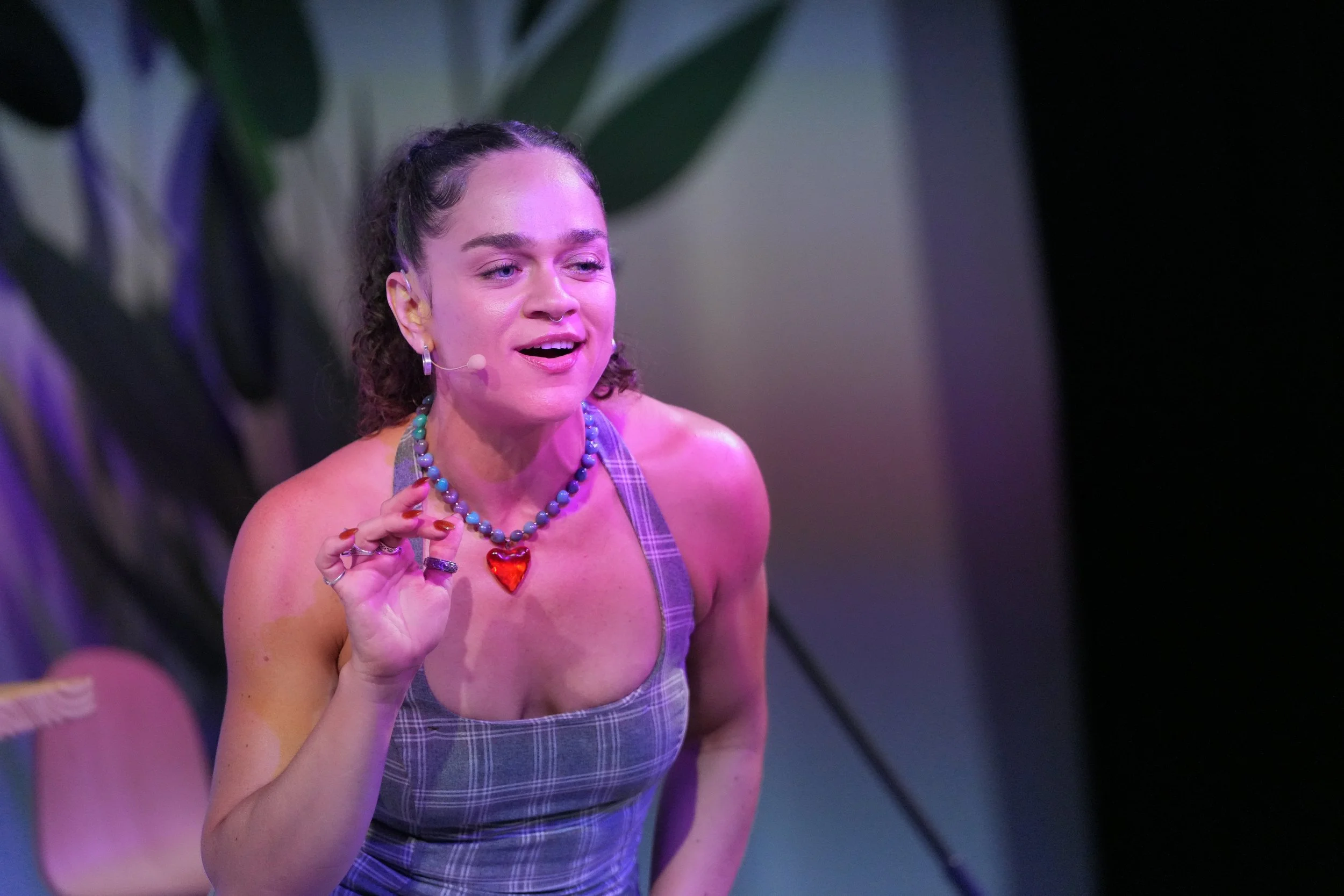
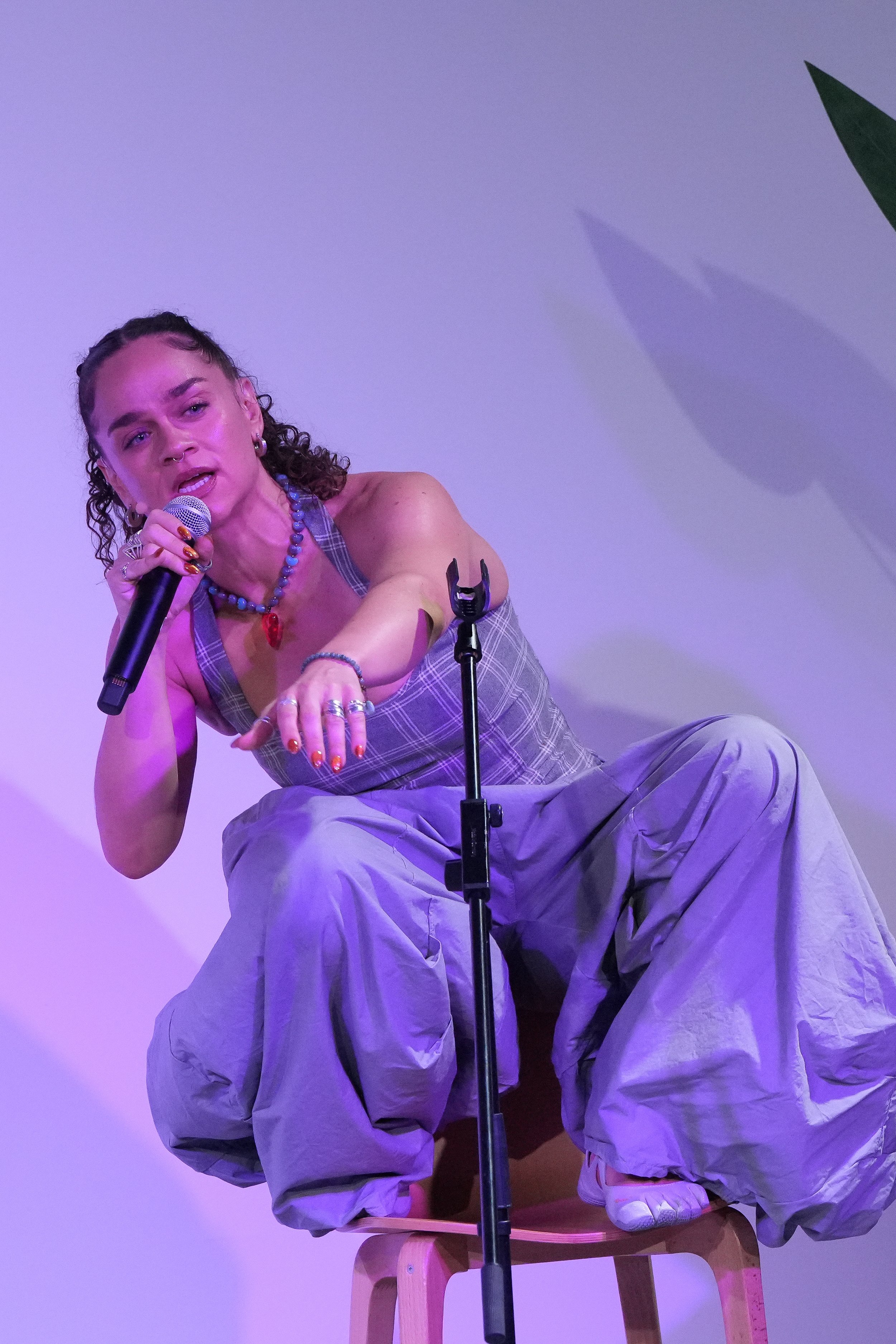
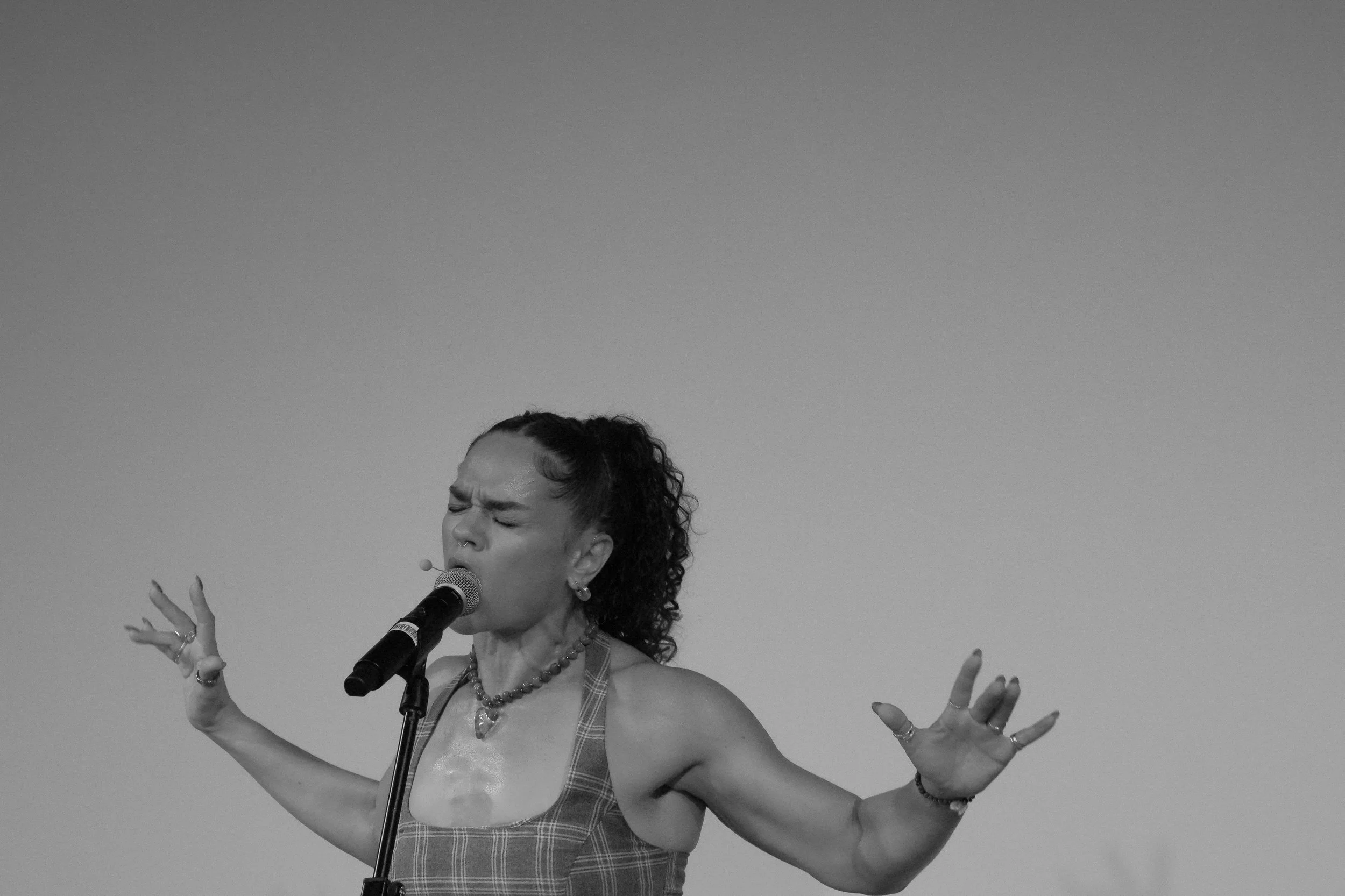
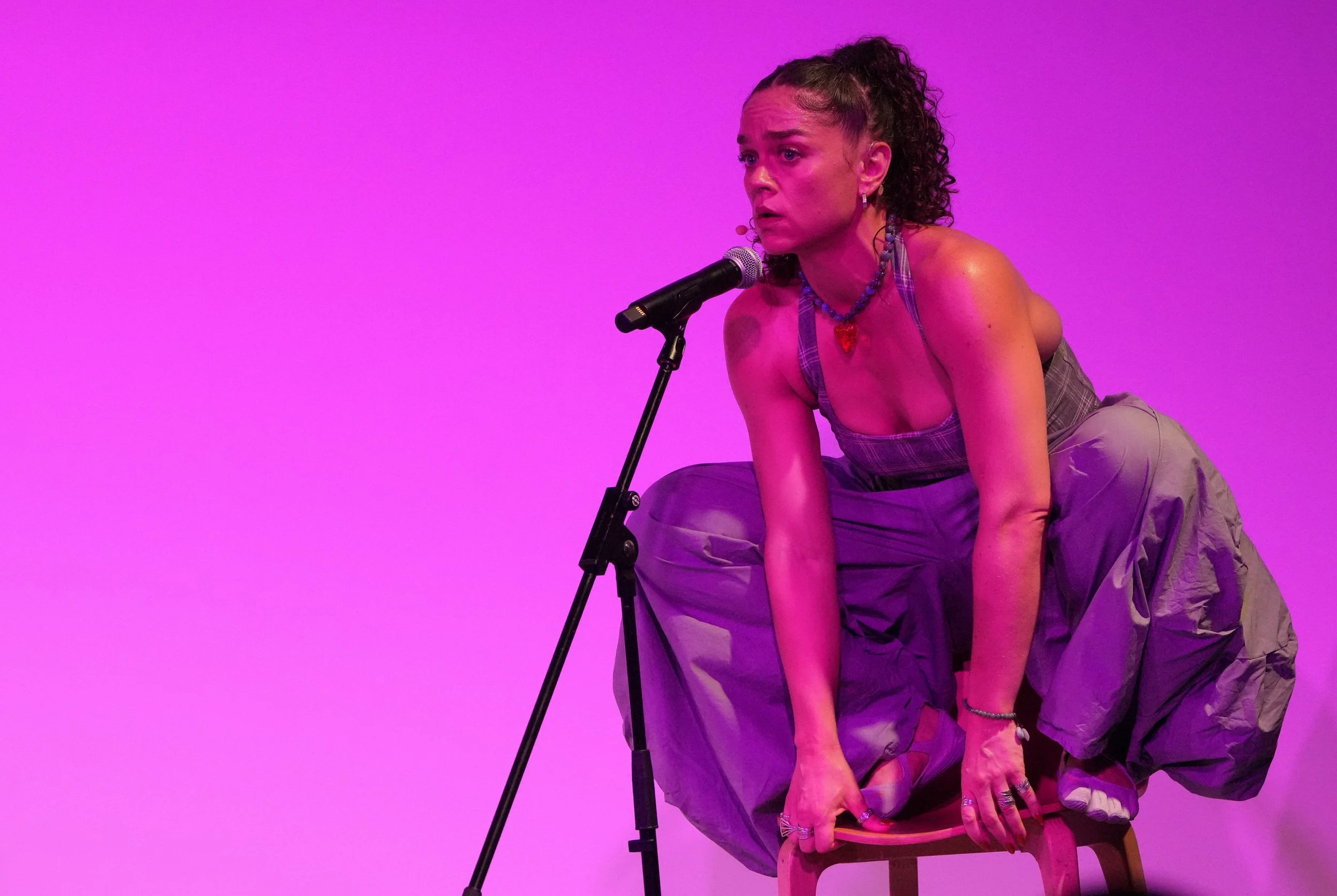
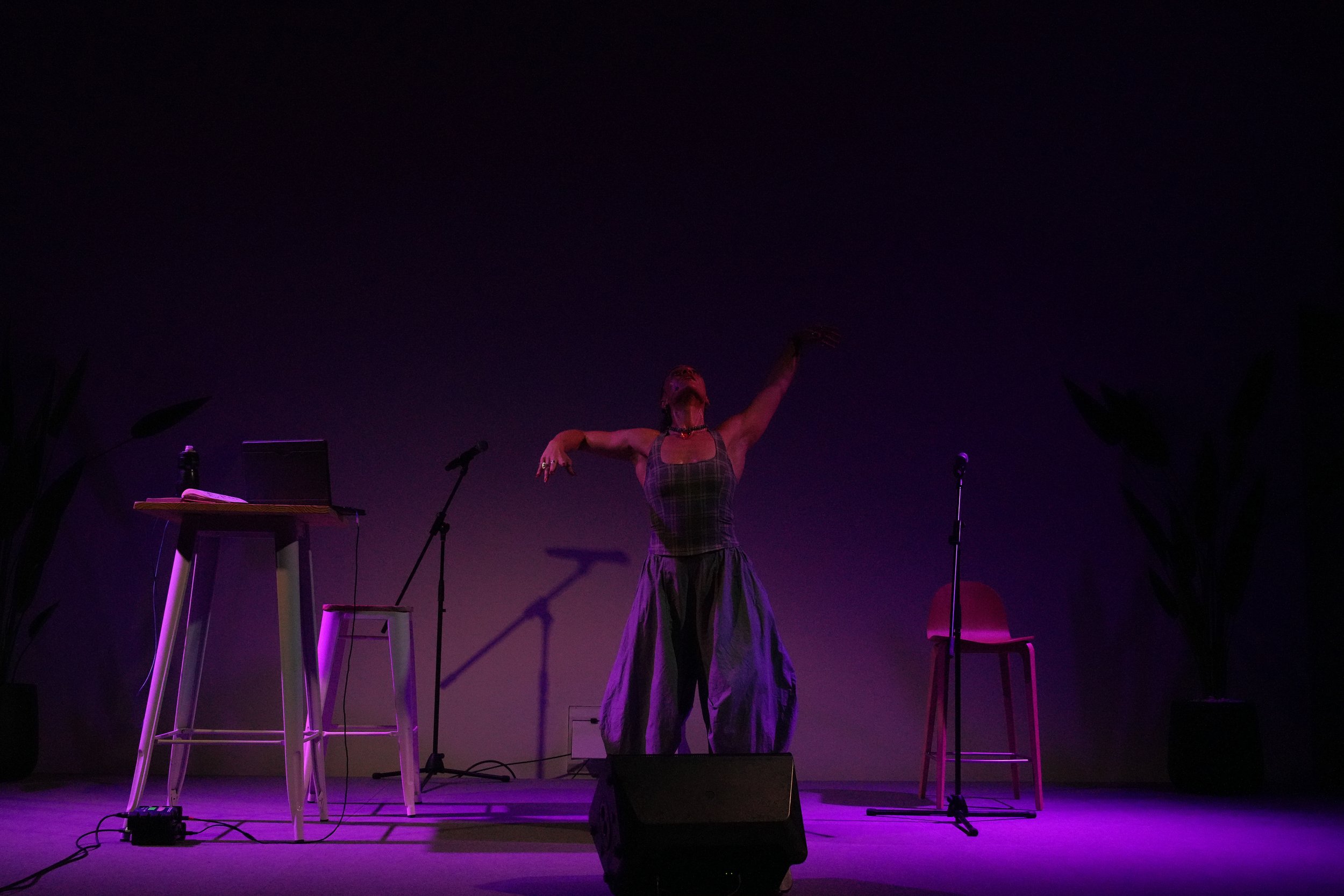
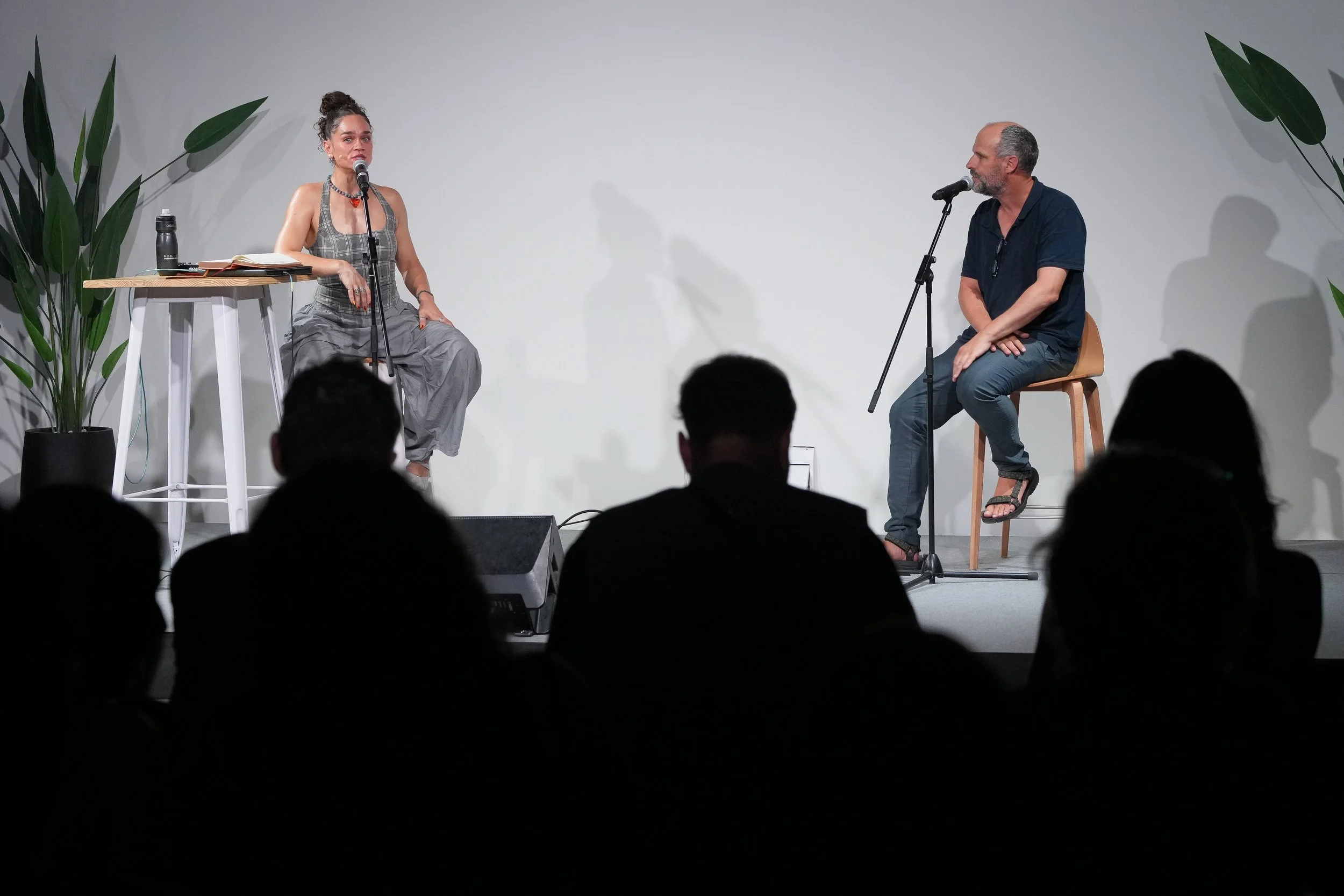
30-60min live performance with option Q&A
A party-fication of the installation. This is available in addition to the installation or as a one-off event. Draft blurb for original performance in Spain below -
‘Before we speak, we bob to the beat, before we know language we know the melody of meaning, before we speak we sway, stim, repeat. Come dance to the music of a language you may not understand but we all speak as Debris Stevenson sonically carries you through the repeated sounds, loops and dance moves that taught her neurodivergent mind how to read and write.
All bodies, sways, stims, tics and ages are welcome.’
Workshop Series
A 5-day workshop series exploring an inter-disciplinary and accessible way of working that encourages participants to ‘follow what they were taught to fight’, leaning into divergences, differences and the seams between the seemingly contradictory things that makes us who we are.
To access the template of the original workshops run at Tabakalera for reference click here.
Technical Specifications
Installation:
8 loudspeakers distributed over three floors, two per floor (operating as 4 stereo pairs).
The optimum way of working is to generate 4 tracks (one per stereo pair of speakers).
All tracks need to be played at once from a laptop (not provided) to be kept in safe location.
Bass required in speaker pairs or additional speakers.
Performance:
2 hand held wireless mics with stands.
1 head mic (if possible).
4 mics rigged on stands or walls for the audience to use that will be connected to drum pads, my laptop or cassettes.
1 music stand.
1 stool to sit on.
1 small table.
Small raised stage.
Lighting - can work with whatever is rigged, no specific requirements.
Musical backing to be run through Ableton Live on Debris’ laptop.
For broadcast audiences to call in live and contribute voice notes I will need a company phone I am able to use.
Access Specifications for workshop participants and performance audience
From an access perspective, below is a description of how we typically like to have spaces set up & the resources to be provided. However we understand it is not always possible so can work collaboratively on what is possible.
Area 1: Access Table
To be by the entrance to the room.
Resources required:
Communication Card Print Out_Aug 2026 (2 versions, 1 in English & 1 to be translated into German)
Pens & post-it notes
Lanyards + red, orange & green paper/card with relevant symbols (to go inside lanyards)
Area 2: Quiet and Relaxation Corner
Depending on the access needs of people in the space, this can be in the same room as where activity is happening.
Resources required:
Communication Card Print Out_Aug 2026 (2 versions, 1 in English & 1 to be translated into German)
Quiet and Relaxation Corner Print Out (2 versions, 1 in English & 1 to be translated into German)
Screens
Ear plugs & noise cancelling headphones
Comfortable seating - e.g. beanbags and cushions
Quiet, tactile, things to do - e.g. books, lego, fidget toys, crafts
Area 3: Chill Out Room
This a separate room from where the Quiet and Relaxation Corner is.
Resources required for this space include all items listed above for the Quiet and Relaxation Corner + somewhere to lie down comfortably.
Debris’s Access PA, Amelia, will facilitate these spaces and will require a dedicated staff point of contact for coordination.
Acknowledgements
Special thanks to Oxford Brookes and the CoRA is an interdisciplinary research centre especially Daniela Treveri Gennari, Ray Lee, David Lloyd, David Carugo, Ruth Shaw-Williams, Abi Simmons, Jane Potter and all my fellow PhD Students for supporting me to develop these ideas and build the installation itself. Special acknowledgements go to researchers in the areas of Neuroqueerness and Bass Culture; Mykaell Riley (Black Music Research Unit) and Nick Walker (Neuroqueer Heresies). Gabriel May and Alfie Barker for supporting the production of the poems recorded for this installation. Finally, Hannah Silva and Amelia Long without whom none of this would be possible.
References
Chapter 3: ‘WOT DO U CALL IT?’ Features an audio excerpt from: Choice FM 96.9 (Night Flight hosted by Commander B), 2002. Featuring: Asher D & Dizzee Rascal. The full source can be found in the Digital archive source courtesy of UK Grime 24 7 on YouTube. Available at: https://www.youtube.com/watch?v=-zbC_n28okE